

High-current Power Electronics operate in demanding environments where Thermal Cycling, vibration, and environmental exposure combine to threaten reliability. While engineers carefully select components and design robust circuits, the protection of solder joints under thermal stress often receives less attention than it deserves. Conformal coating provides a critical defense layer that can mean the difference between years of reliable operation and premature field failures.
In high-current applications, solder joints face unique challenges beyond typical electronics. Repeated heating and cooling cycles during operation create mechanical stress at the interface between dissimilar materials. Current flow generates localized heating that compounds thermal stress. Environmental factors like humidity and contaminants accelerate degradation mechanisms. Understanding how conformal coating addresses these specific threats is essential for designing reliable Power Electronics.
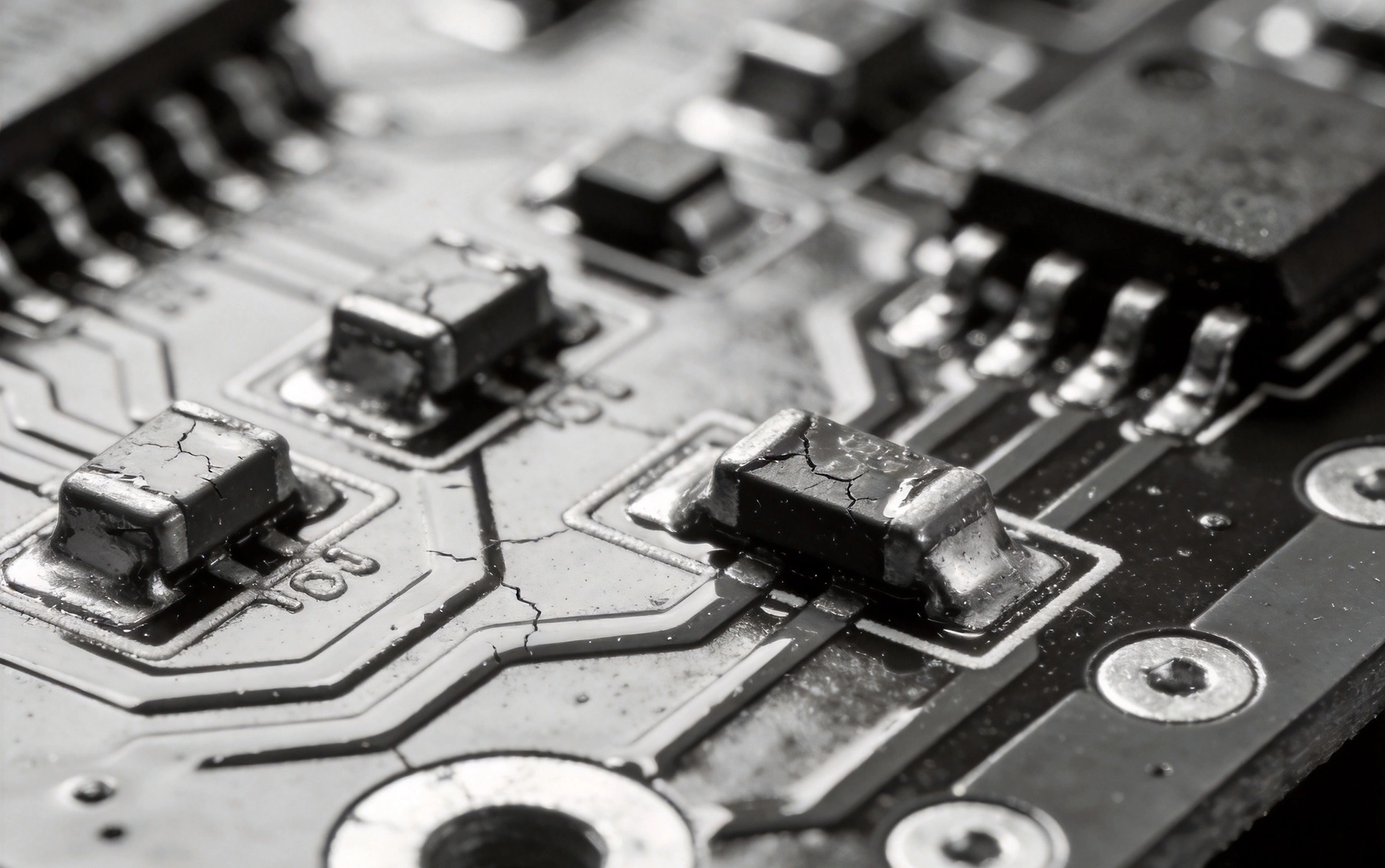
Thermal stress in solder joints arises from coefficient of thermal expansion (CTE) mismatches between different materials. Copper traces expand at approximately 17 ppm/°C, while typical solder alloys expand at 21-25 ppm/°C. Component leads and PCB substrates have their own expansion characteristics. When temperature changes, these materials expand and contract at different rates, creating mechanical stress at their interfaces.
For high-current PCBs, thermal stress occurs through multiple mechanisms. Ambient temperature changes affect the entire assembly uniformly. Power dissipation in components creates localized hot spots with temperature gradients that stress nearby joints. Switching losses and resistive heating in traces generate Thermal Cycling at frequencies related to operating conditions. Each mechanism contributes to accumulated fatigue in solder joints.
Over time, thermal cycling initiates and propagates cracks in solder joints. These cracks typically begin at the interface between solder and component lead or pad, where stress concentration is highest. As cracks propagate through the solder joint, electrical resistance increases, which in turn generates more heating—a positive feedback loop that accelerates failure. Conformal coating interrupts this degradation process by managing thermal stress distribution and protecting against environmental factors that accelerate crack growth.
Conformal coating provides multiple protective mechanisms that work together to enhance Solder Joint Reliability under thermal stress.
A key benefit of conformal coating is its ability to distribute thermal stress across a larger area. Without coating, stress concentrates at the solder joint interface where dissimilar materials meet. The coating layer creates a gradual transition zone that spreads mechanical load, reducing peak stress levels that drive crack initiation and propagation.
The coating's thermal expansion characteristics also matter. Materials with expansion coefficients intermediate between solder and PCB help buffer CTE mismatch effects. For high-current applications experiencing large temperature swings, selecting coating materials with appropriate mechanical properties significantly impacts joint longevity.
Environmental contaminants accelerate solder joint degradation through multiple mechanisms. Moisture absorption creates pressure differentials that drive contaminant migration into joints. Ionic contaminants promote electrochemical migration and corrosion at solder interfaces. Atmospheric pollutants like sulfur compounds attack solder alloys directly. Conformal coating creates a barrier that prevents these environmental factors from reaching solder joints.
For high-current applications, environmental protection is particularly critical. Higher current flow increases electrolytic corrosion mechanisms when contaminants are present. Thermal cycling creates pump mechanisms that draw contaminants into joints during expansion and contraction cycles. Effective conformal coating eliminates these accelerated degradation paths.
High-current power electronics often operate in environments with significant mechanical vibration—motor drives in industrial equipment, power supplies in transportation applications, inverters in renewable energy systems. Conformal coating provides mechanical damping that reduces stress on solder joints during vibration exposure.
The coating layer absorbs vibration energy that would otherwise transmit directly to solder joints. This damping effect is particularly valuable at component edges and corners where stress concentration occurs. For applications with known vibration profiles, coating selection should consider mechanical damping properties alongside thermal and environmental protection capabilities.
Choosing the right conformal coating material requires balancing multiple factors specific to high-current power electronics.
Coating materials must withstand the temperature ranges experienced in high-current operation. While maximum operating temperature is often considered, minimum temperature capability is equally important for applications exposed to cold environments or thermal cycling between extremes. Material properties change significantly at temperature extremes—flexibility increases at high temperature while brittleness develops at low temperature.
Thermal conductivity of the coating affects component cooling. Lower thermal conductivity can trap heat in components, raising their operating temperature. For high-current components already running near thermal limits, coating selection must consider Thermal Management implications. Some specialized coatings offer improved thermal conductivity while maintaining protective properties.
Acrylic coatings offer easy application and reworkability but limited thermal and chemical resistance. They suit moderate-temperature applications where accessibility for repair matters more than maximum protection. Operating temperature typically limits around 125°C.
Silicone coatings provide excellent flexibility and thermal stability, making them suitable for high-temperature applications. Their inherent flexibility handles thermal cycling well, reducing stress on underlying solder joints. Temperature capability often exceeds 200°C, making silicone appropriate for demanding thermal environments.
Urethane coatings offer good chemical and abrasion resistance with moderate temperature capability. They form tough, durable films that protect against harsh environments. However, their higher modulus can transmit more stress to solder joints compared to flexible silicone alternatives.
Epoxy coatings provide maximum chemical resistance and mechanical protection but with significant drawbacks for high-current applications. Their high modulus and poor reworkability make them less suitable when thermal stress distribution matters. Epoxy coatings typically serve harsh chemical environments where other materials cannot survive.
Coating thickness directly affects protection level and stress distribution capability. Thicker coatings provide better environmental barrier performance but may trap more heat and create larger thermal gradients. Thin coatings conform better to component geometry but offer reduced moisture barrier protection.
For high-current applications, coating thickness should balance protection and Thermal Management. Typical thickness ranges from 25-75 microns depending on application requirements. Areas around high-power components may benefit from thinner coating to minimize thermal impact, while edge areas can use thicker coating for enhanced environmental protection.
Proper application is critical for achieving the protection conformal coating promises. Poor application can create defects that concentrate stress or allow environmental ingress.
Complete coverage without thin spots or voids is essential for effective protection. Spray application requires careful technique to achieve uniform coating across complex geometries. Dip application provides thorough coverage but may require masking to prevent coating in connector areas. Selective application methods offer precision but demand careful process control.
For high-current applications, pay particular attention to coating coverage around component edges and corners where stress concentration occurs. These areas benefit from slightly thicker coating to enhance stress distribution. Quality inspection should verify coverage at critical stress points.
Coating adhesion to solder mask, components, and solder joints determines long-term reliability. Poor adhesion creates gaps that trap moisture and contaminants, undermining protection effectiveness. Surface preparation—cleaning and sometimes priming—ensures good adhesion across all coated surfaces.
In high-current applications, verify that coating adheres well to high-temperature components and their solder joints. These areas experience the most thermal stress, making interface quality critical. Adhesion testing during process development validates that application procedures achieve required bond strength.
High-current power electronics may require repair during manufacturing or service life. Coating material selection should consider rework requirements. Acrylic and some silicone coatings allow relatively easy removal for component replacement. Urethane and epoxy coatings require more aggressive removal methods that may stress adjacent components.
When repair is necessary, proper recoating procedure ensures continued protection. Removing coating around the repair area, completing the repair, cleaning thoroughly, and applying fresh coating maintains protection integrity. Process documentation should specify repair procedures for each coating type used.
Validating conformal coating effectiveness for high-current applications requires testing that reflects actual operating conditions.
Thermal cycling between temperature extremes stresses coating and solder joints through repeated expansion and contraction. Test protocols should span the full temperature range expected in service, including margins for abnormal conditions. Monitoring electrical resistance of critical joints during cycling reveals degradation before complete failure occurs.
For high-current applications, thermal cycling tests should include powered operation to generate realistic thermal gradients. Power cycling tests—alternating between full-load operation and idle states—exercise joints under conditions closer to actual service than simple ambient temperature cycling alone.
Humidity exposure testing validates moisture barrier effectiveness. Standard tests expose coated assemblies to high humidity at elevated temperature, accelerating moisture penetration mechanisms. Inspecting for corrosion or electrical degradation after exposure confirms coating integrity.
For applications in harsh environments, consider testing with specific contaminants expected in service. Salt spray testing addresses marine or automotive environments. Sulfur exposure testing validates protection against atmospheric pollutants that attack solder alloys.
Visual inspection under UV light reveals coverage uniformity when fluorescent additives are incorporated in the coating. This technique identifies thin spots, voids, and coating defects that compromise protection. For critical applications, automated optical inspection systems provide consistent quality verification.
Cross-section analysis of sample boards validates coating thickness and interface quality. This destructive testing method suits process validation rather than production inspection. Periodic cross-section analysis during production confirms that application processes remain within specification.
Understanding typical errors helps avoid reliability problems in conformal coating implementation.
Contamination on solder joints and adjacent surfaces prevents proper coating adhesion. Flux residues, fingerprints, and process chemicals left on boards create weak interfaces that fail under thermal stress. Thorough cleaning before coating application is essential for reliable protection.
Voids in coating—whether from trapped air bubbles, inadequate spraying technique, or shadowing from component geometry—create local vulnerability. Moisture and contaminants penetrate at voids, accelerating degradation of nearby solder joints. Process development must achieve void-free coverage across complex topographies typical of high-current assemblies.
Coating materials must be compatible with solder mask, component materials, and operating conditions. Incompatibility can cause adhesion failure, chemical attack on components, or degradation of protective properties during service. Material selection should verify compatibility across all materials present in the assembly.
Successful conformal coating implementation for high-current applications follows established best practices.
Conformal coating provides essential protection for solder joints in high-current PCBs operating under thermal stress. By distributing mechanical stress, preventing environmental ingress, and damping vibration, coating enhances joint reliability beyond what careful design alone can achieve. Material selection, application quality, and thorough testing determine whether coating delivers its intended protection.
For power electronics engineers, conformal coating deserves consideration as part of comprehensive reliability design rather than an afterthought added late in development. Early integration of coating requirements enables optimal material selection and application process development. The investment in proper conformal coating implementation pays dividends through years of reliable operation in demanding applications.
Silicone coatings typically offer the best combination of thermal stability, flexibility, and stress distribution for high-temperature applications. They maintain flexibility across wide temperature ranges, handle thermal cycling well, and withstand temperatures exceeding 200°C. This flexibility reduces stress transmission to underlying solder joints compared to harder coating materials.
Thicker coating provides better environmental protection but can trap heat in components due to typical coatings' low thermal conductivity. For high-current components near thermal limits, thinner coating in the immediate component area helps maintain cooling while providing adequate protection. Optimal thickness balances environmental protection and thermal management for each application.
Conformal coating should be applied to clean, cool assemblies before service, not to operating boards. Components must be at room temperature for proper coating cure and adhesion. Operating assemblies have surface contamination and elevated temperatures that prevent proper coating application. Apply coating during manufacturing before assembly enters service.
Visual inspection under UV light reveals coverage uniformity when fluorescent additives are incorporated in the coating. This method identifies thin spots, voids, and coverage gaps. For production quality control, automated optical inspection systems provide consistent verification. Cross-section analysis of sample boards during process validation confirms thickness and interface quality.
Properly selected and applied conformal coating extends solder joint thermal cycling life by distributing mechanical stress and preventing environmental degradation. The coating creates a gradual transition zone between dissimilar materials, reducing peak stress at interfaces. However, inappropriate coating materials or poor application can concentrate stress or trap contaminants, potentially reducing joint life.
High Current PCB Material Showdown: FR4 vs. Metal-Core vs. PolyimideJuly/14/2026
Best Material for High Current PCB Design: How to Choose the Right SubstrateJune/05/2026
How Much Current Can a PCB Trace Carry? Complete Engineering GuideMay/20/2026
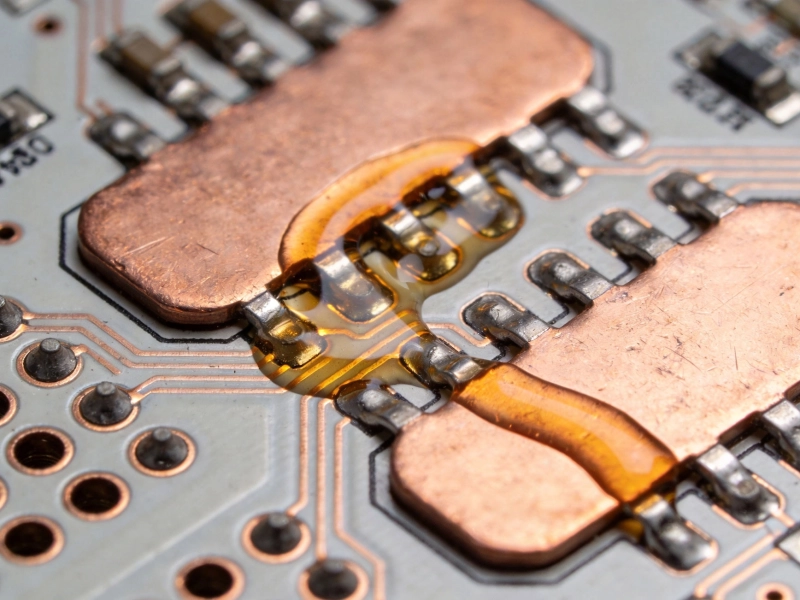
High Current PCB Solder Joints: Wave Soldering vs. Selective SolderingJuly/15/2026
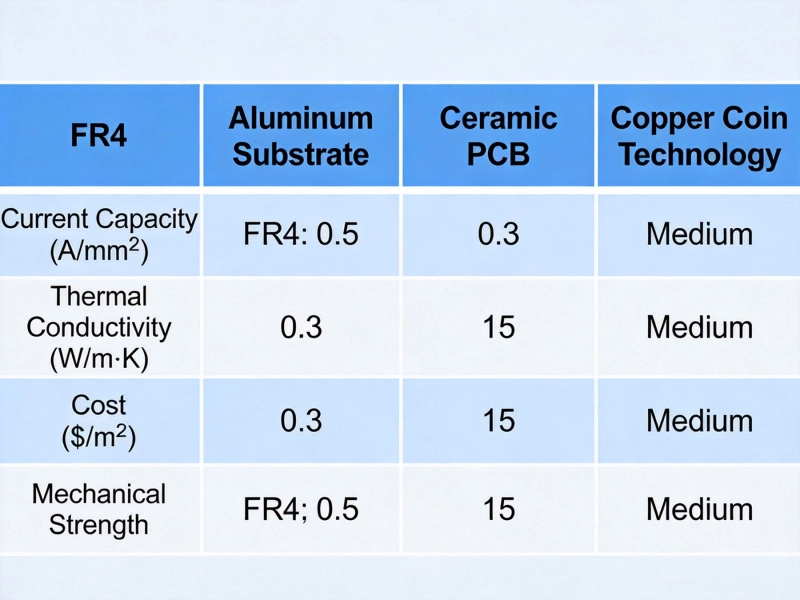
Best Material for High Current PCB DesignMay/21/2026
High Current PCB EMI Shielding: Ground Pour vs. Shielding CansAugust/14/2026
High Current PCB Pad Design: Reinforced Plating vs. Standard PadsJuly/28/2026
Copper Pour vs Trace: What 3 Years of PCB Failures Taught UsMay/21/2026