

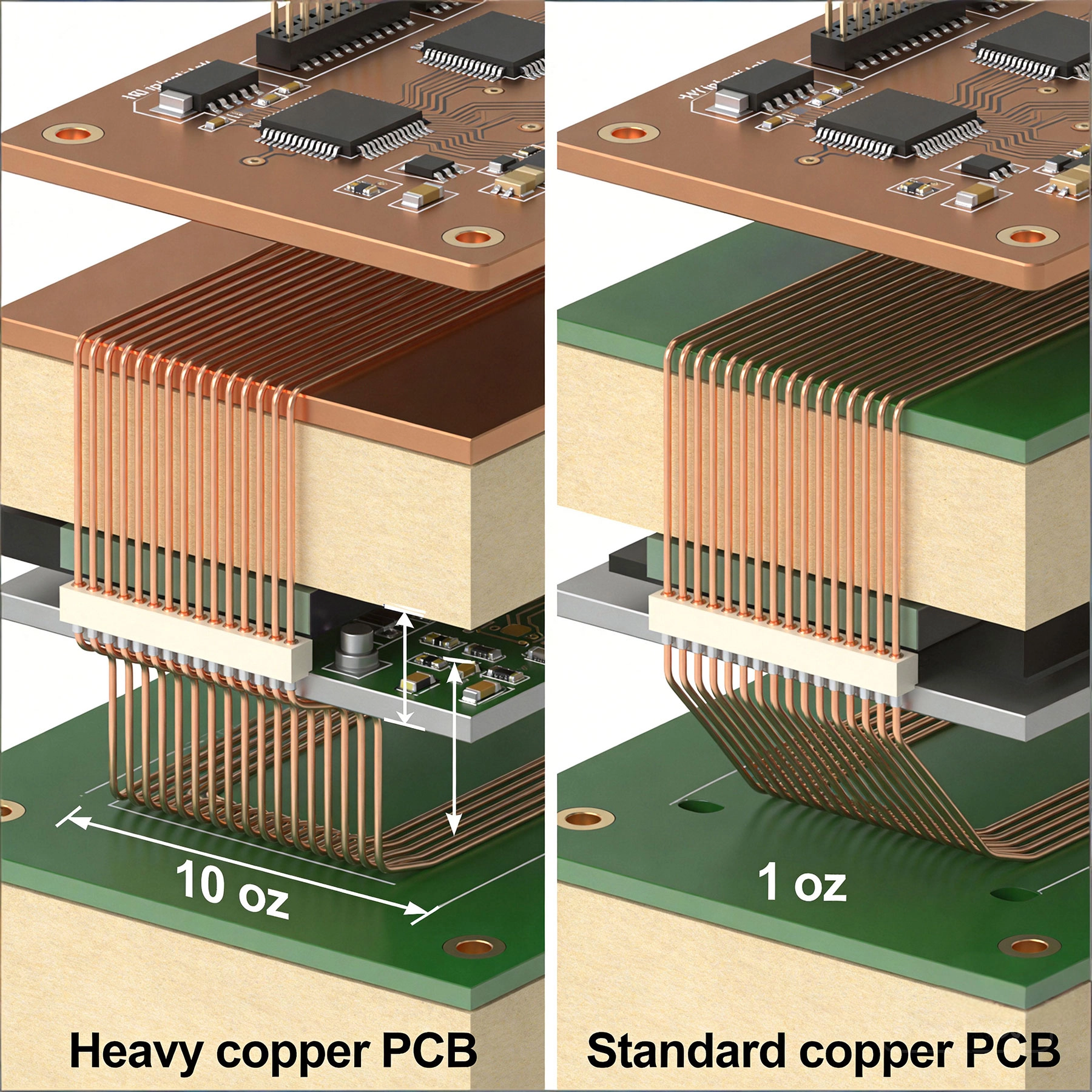
Heavy copper PCBs offer significantly more copper thickness for high-power applications compared to standard PCBs Introduction: Understanding Copper Weight in PCB Design When designing printed circuit boards, one of the most critical decisio...
https://www.high-current-pcb.com/high-current-pcb-manufacturing-tech/heavy-copper-vs-standard-copper-pcb-complete-comparison-guide-for-engineers/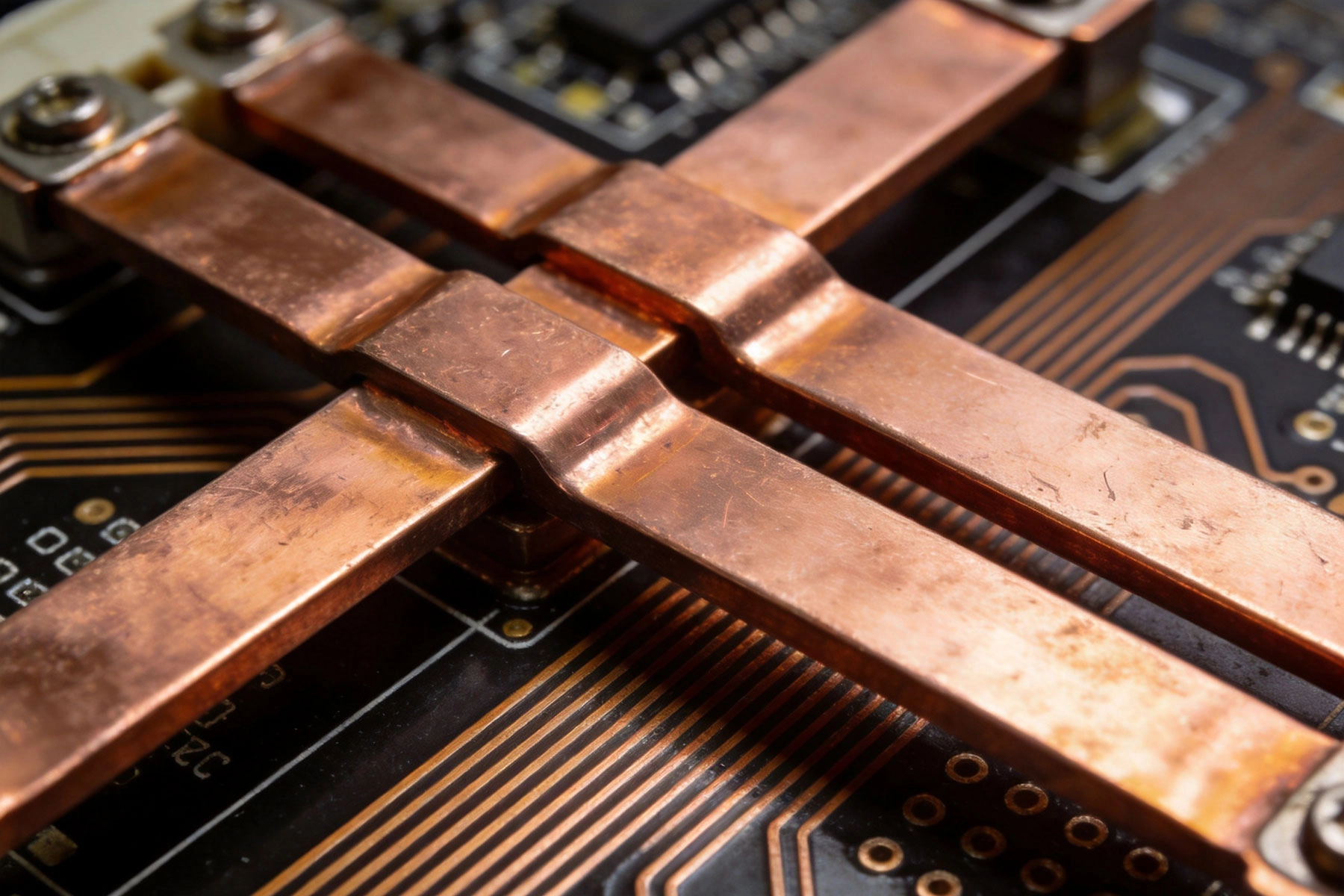
Introduction: The High Current Challenge Every electronics engineer faces this moment: your power-hungry application needs to move serious current—tens or even hundreds of amps—but your PCB traces just aren't cutting it. You start doing the mat...
https://www.high-current-pcb.com/high-current-pcb-faq/bus-bar-vs-pcb-trace-for-high-current-which-solution-wins/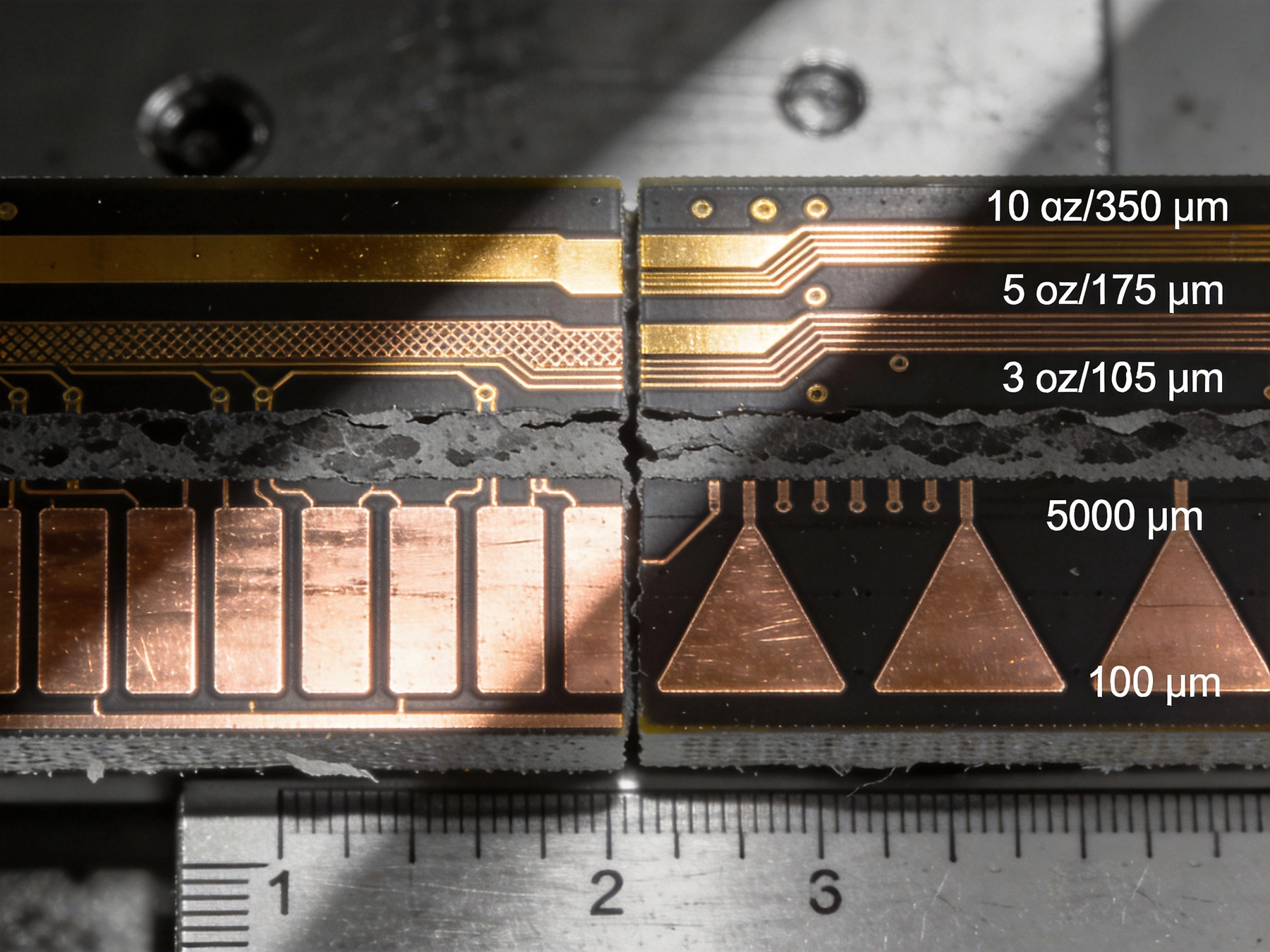
Copper weight selection stands among the most consequential decisions in power electronics PCB design. The choice between 2oz and 4oz copper affects everything from current-carrying capacity and thermal performance to manufacturing cost and fabrica...
https://www.high-current-pcb.com/automotive-ev-systems/cost-comparison-2oz-vs-4oz-copper-pcb-what-you-need-to-know/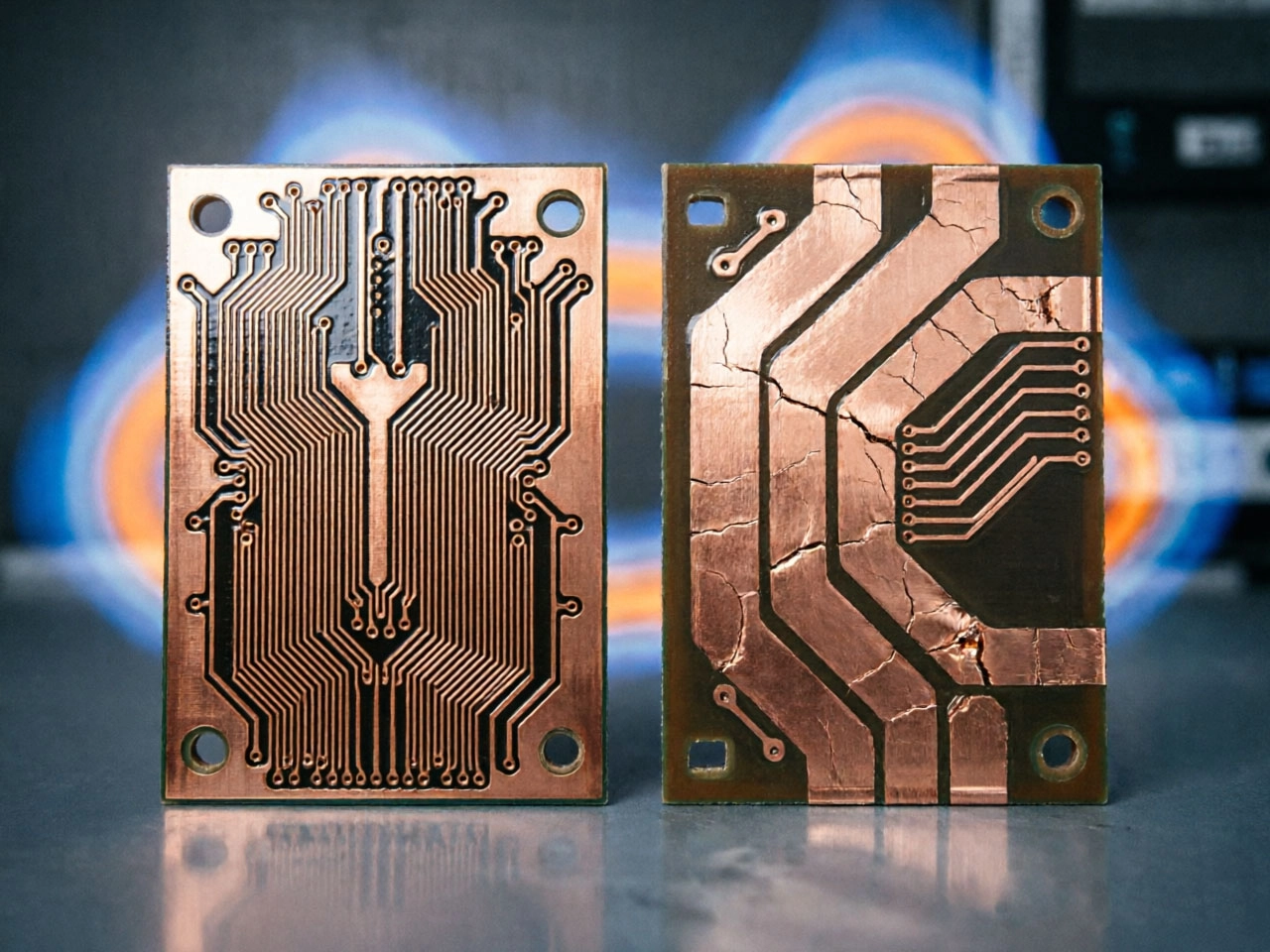
Every PCB generates heat when current flows through its traces. At low current levels—tens or hundreds of milliamps—the heat is negligible, dissipated quickly by the surrounding material, and rarely a concern. But when current climbs into the amper...
https://www.high-current-pcb.com/high-current-pcb-manufacturing-tech/high-current-pcb-vs-standard-pcb-a-real-world-thermal-stress-test/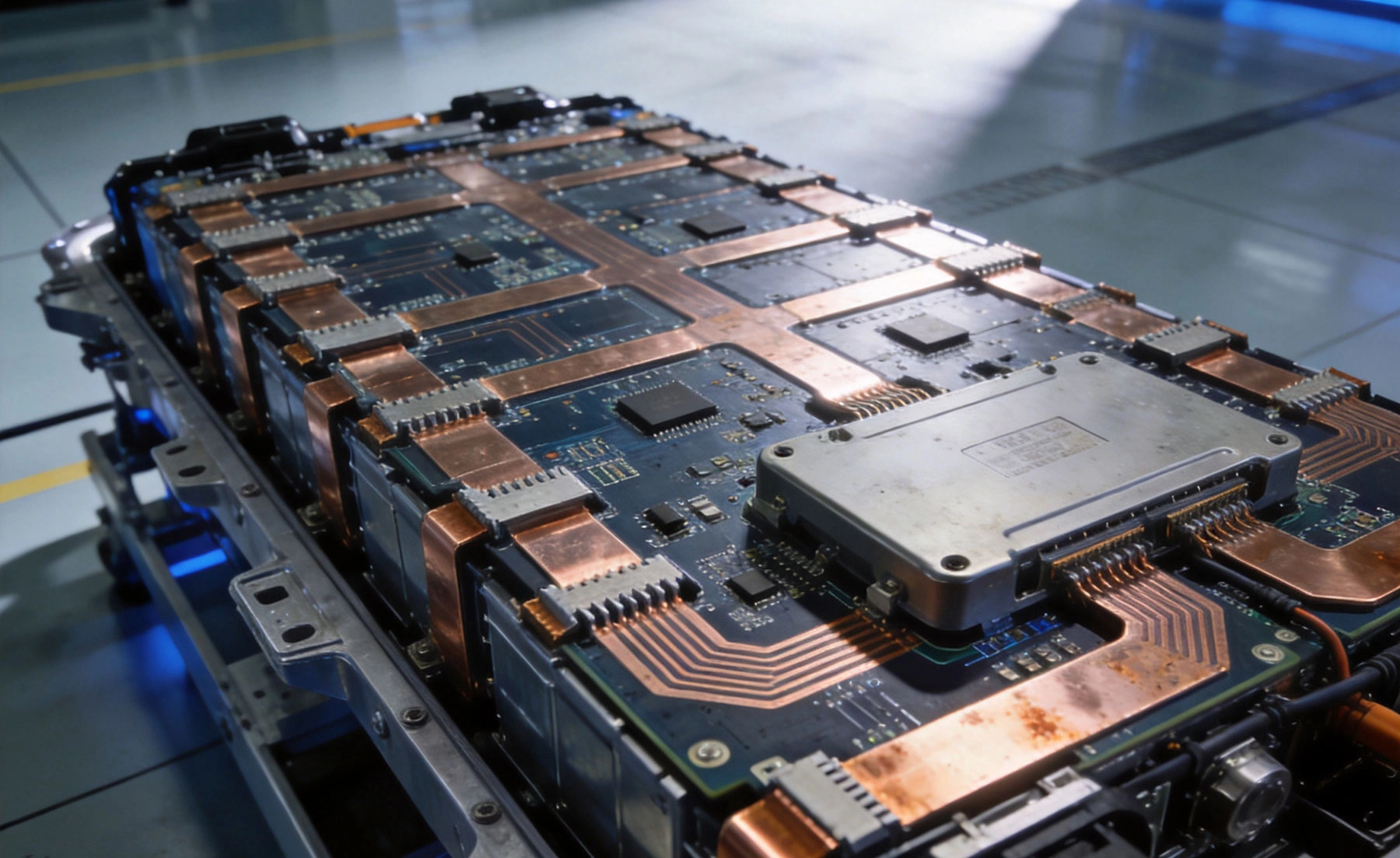
Designing a PCB that handles 100 amperes of continuous current is not a straightforward scaling exercise from a 10-ampere board. At 100 amperes, the physics of electrical resistance, thermal management, and electromagnetic interference all become s...
https://www.high-current-pcb.com/high-current-pcb-thermal-design/designing-a-100a-high-current-pcb-for-ev-battery-management-systems/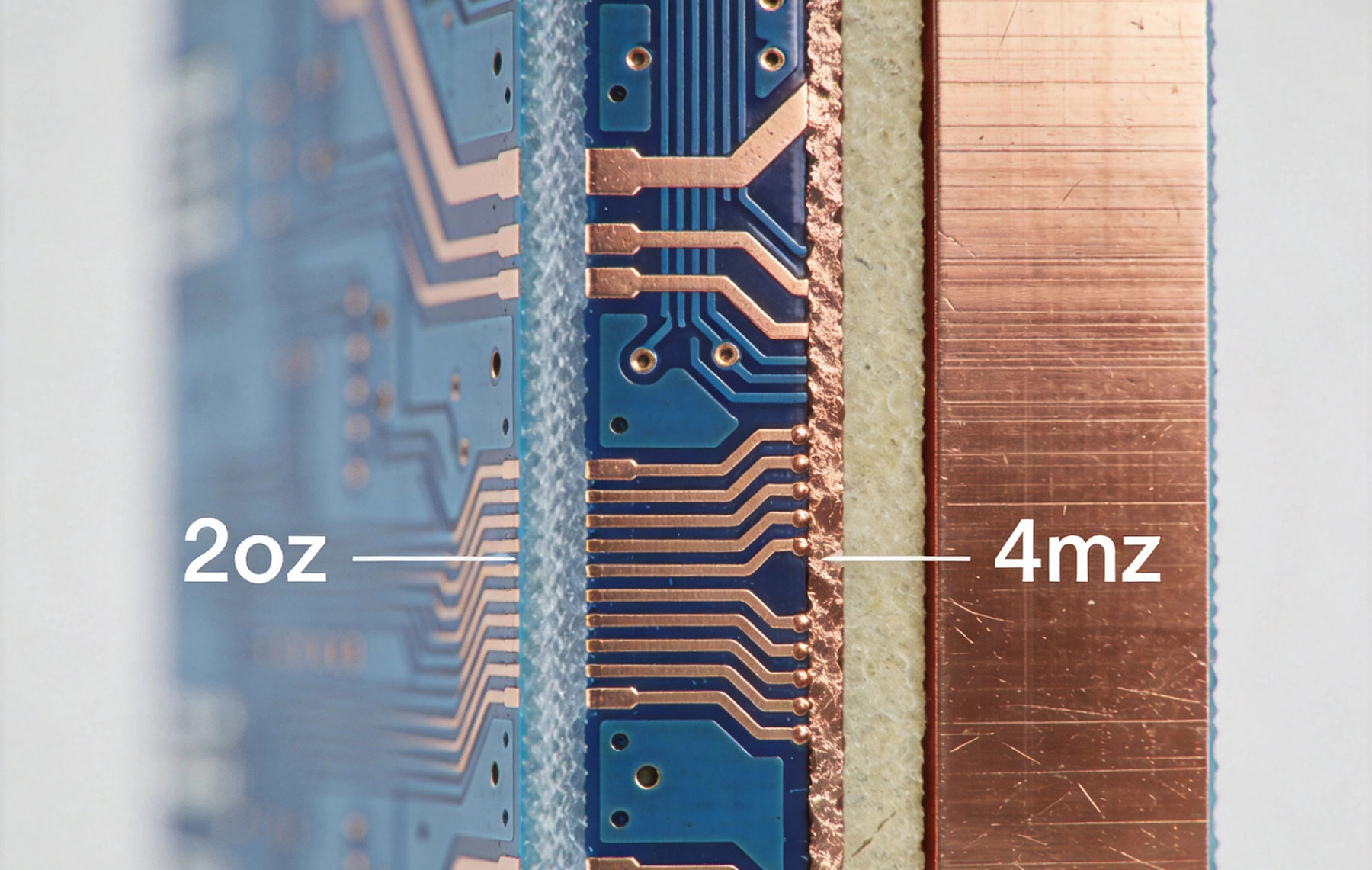
When designing printed circuit boards for high current applications, copper thickness becomes a critical decision that impacts everything from electrical performance to thermal management and manufacturing cost. The choice between 2oz and 4oz coppe...
https://www.high-current-pcb.com/high-current-pcb-thermal-design/2oz-vs-4oz-copper-which-is-best-for-your-high-current-pcb/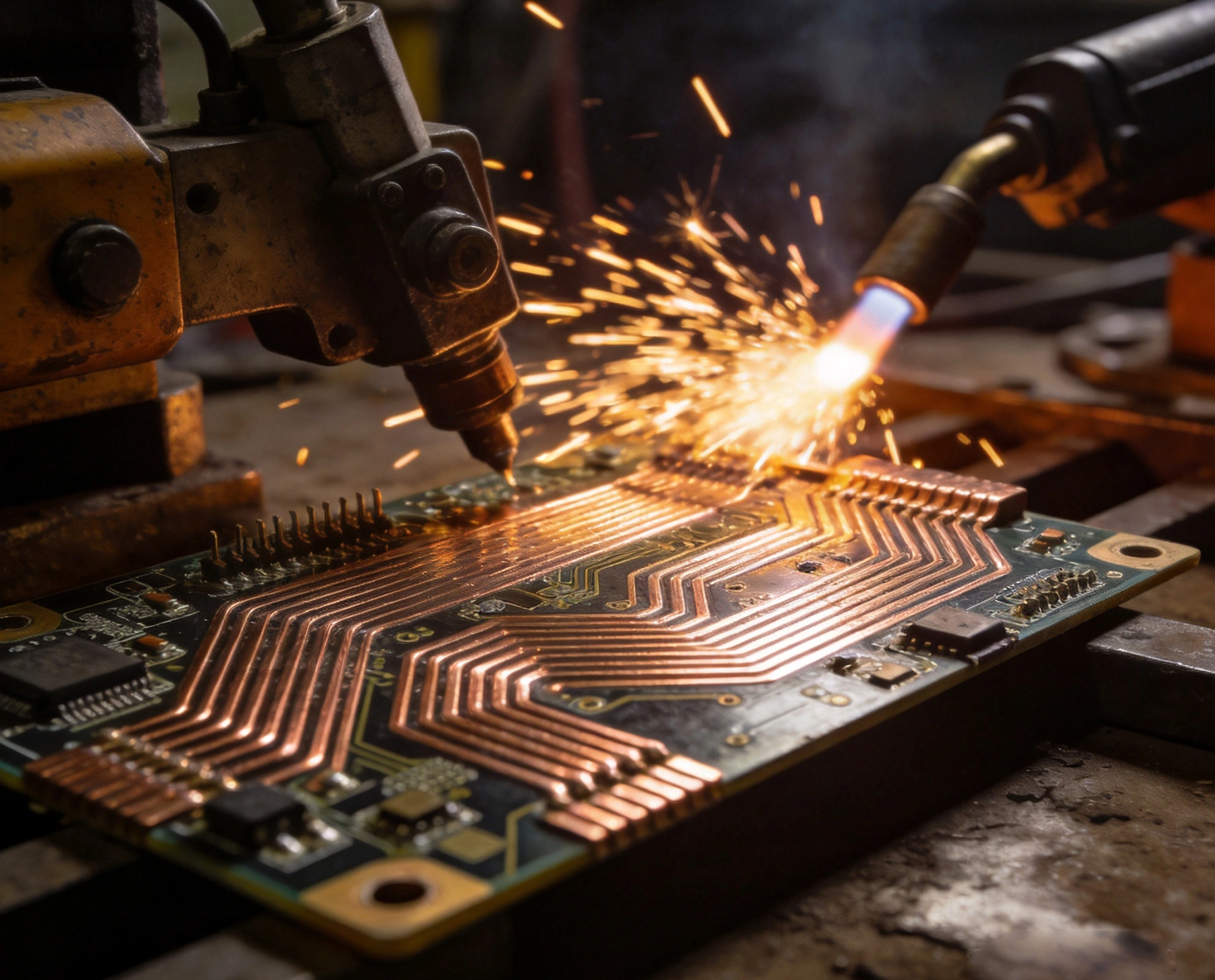
Industrial welding equipment pushes the boundaries of what a printed circuit board is expected to do. Unlike consumer electronics, where currents are measured in milliamps and thermal margins are generous, welding machines demand PCB designs that c...
https://www.high-current-pcb.com/high-current-pcb-thermal-design/designing-a-high-current-pcb-for-industrial-welding-equipment/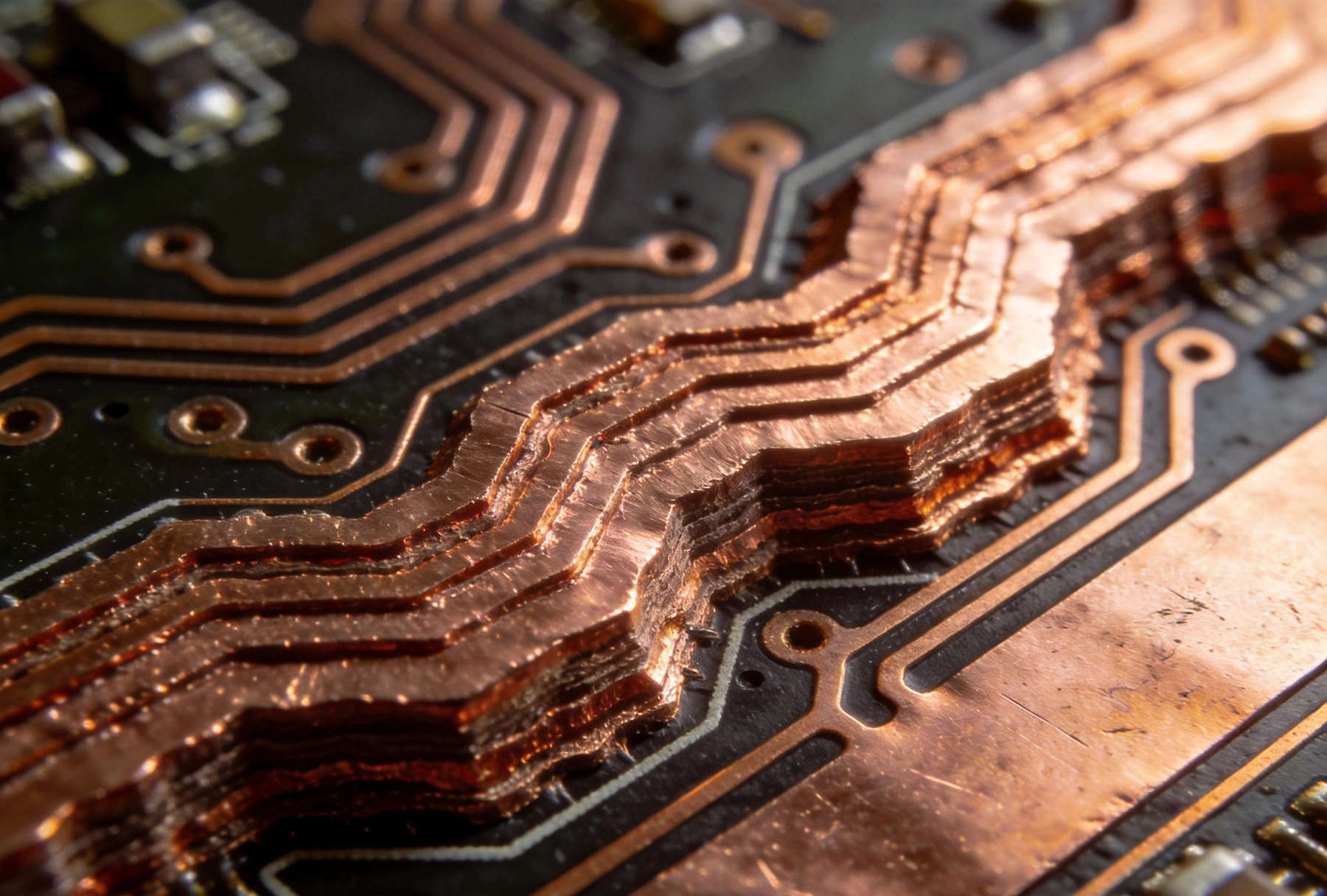
Power electronics design presents unique challenges that differ fundamentally from signal-level circuit design. When current requirements climb above 10 or 20 amps, the humble copper trace that works perfectly for data signals becomes a liability. ...
https://www.high-current-pcb.com/high-current-pcb-dfm-tips/high-current-pcb-bus-bars-vs-heavy-copper-traces-cost-and-performance/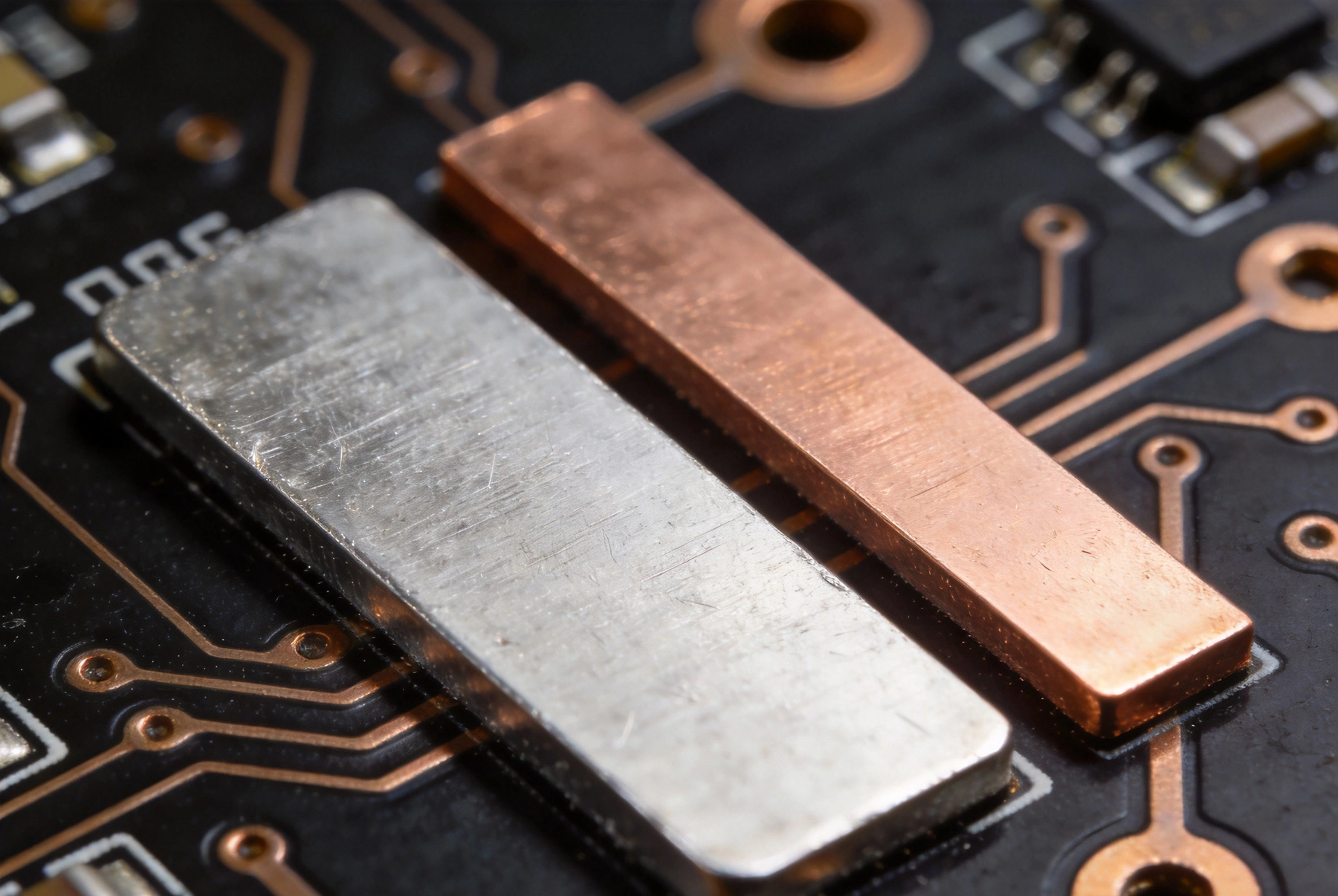
Every power electronics design eventually runs into the same problem: a trace that carries 10 amps without complaint at room temperature becomes a reliability liability when the ambient climbs to 60°C or the board sits in a poorly ventilated enclos...
https://www.high-current-pcb.com/high-current-pcb-thermal-design/high-current-pcb-pad-design-reinforced-plating-vs-standard-pads/
Server racks today demand more power than ever before. A single high-density rack can house hundreds of blade servers, storage arrays, network switches, and power distribution units that collectively draw tens of kilowatts. At the heart of deliveri...
https://www.high-current-pcb.com/high-current-pcb-manufacturing-tech/building-a-high-current-pcb-power-supply-for-server-racks/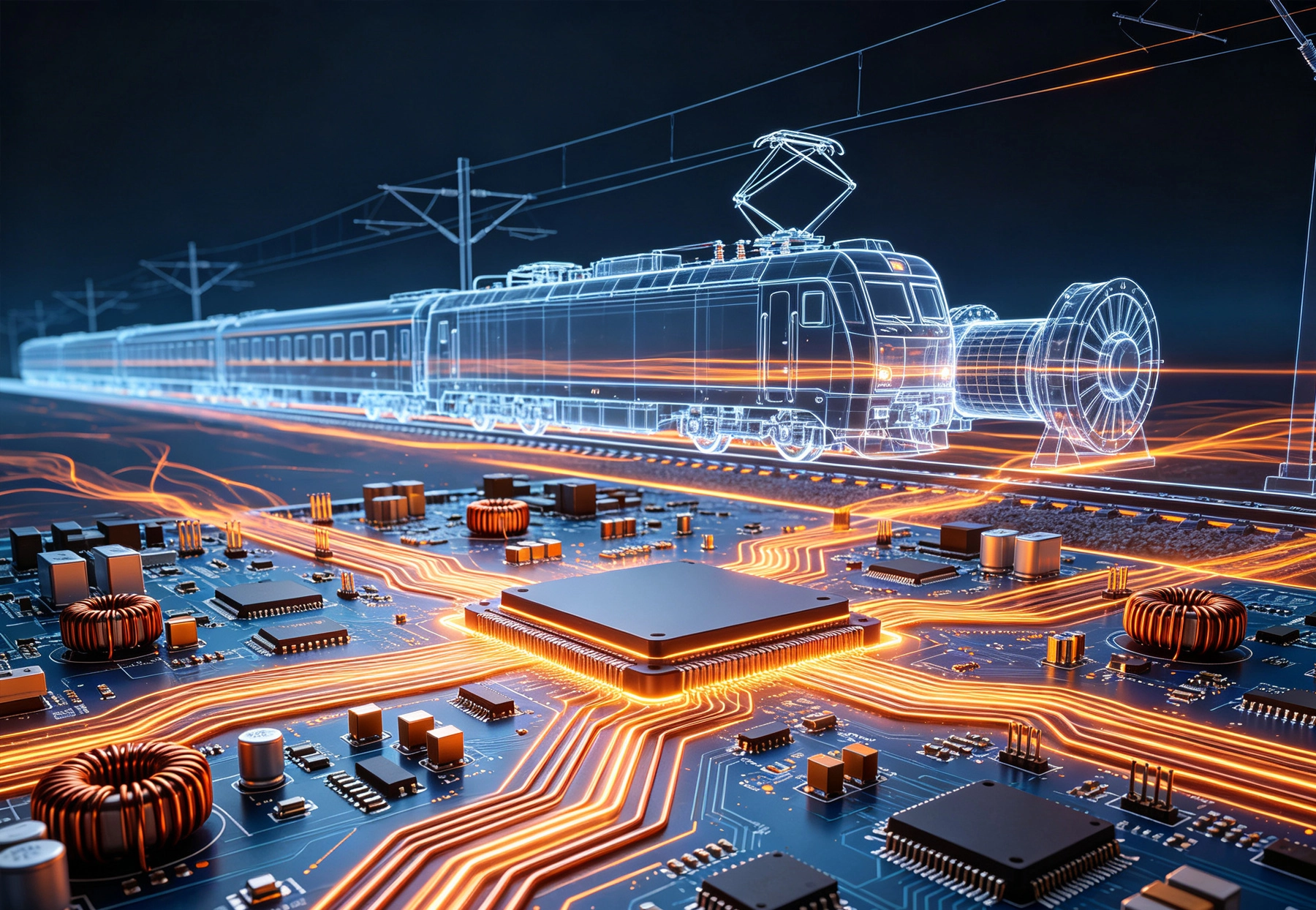
Railway traction systems represent some of the most demanding applications for power electronics. These systems control massive electric motors that propel trains, trams, and high-speed rail vehicles, requiring PCB designs capable of handling hundr...
https://www.high-current-pcb.com/high-current-pcb-thermal-design/high-current-pcb-design-for-railway-traction-systems/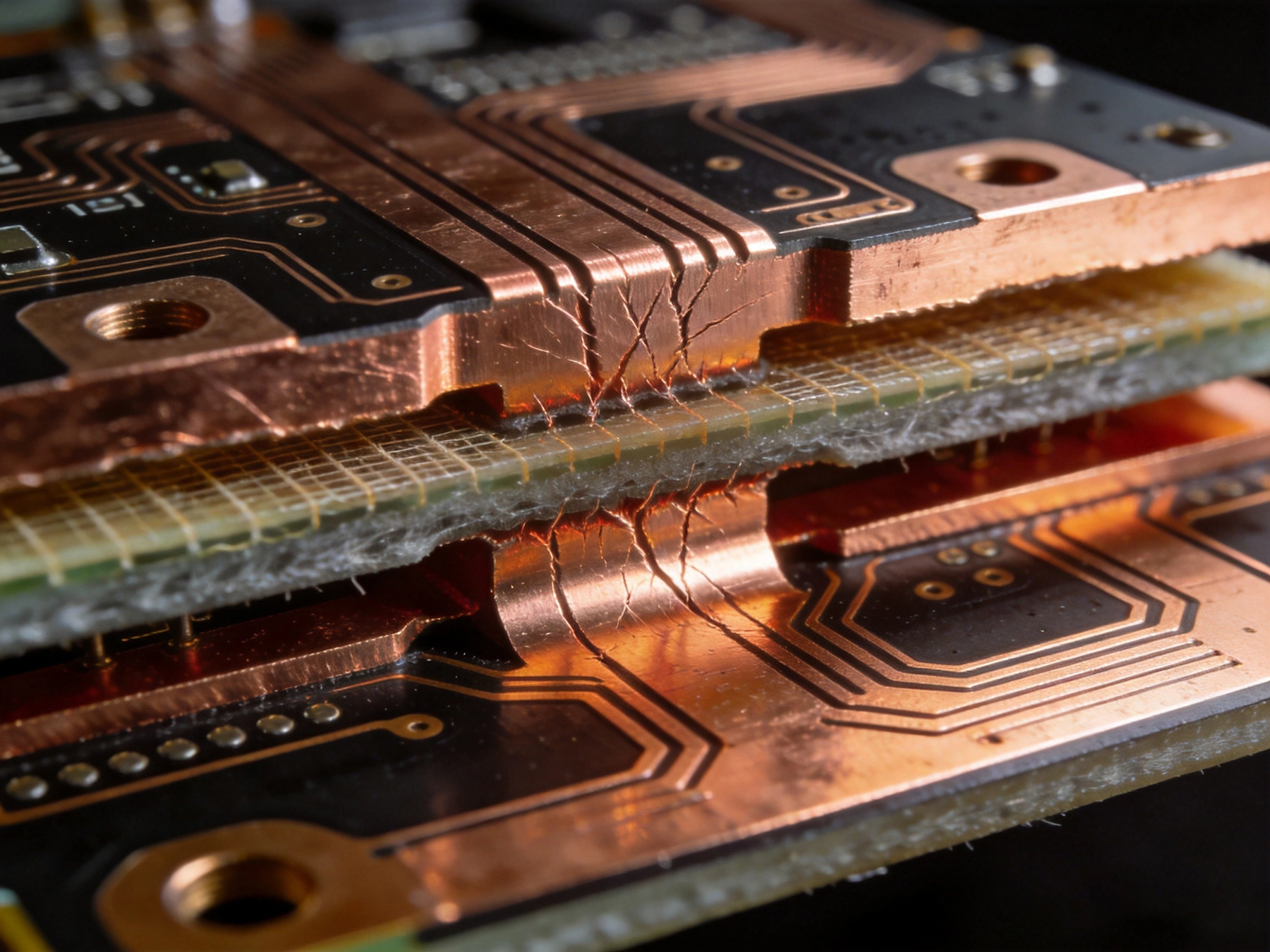
Heavy copper PCBs power everything from electric vehicle chargers to industrial motor drives, carrying currents that would destroy standard circuit boards. Yet the very copper that makes these boards capable of handling high amperage also creates o...
https://www.high-current-pcb.com/high-current-pcb-basics/high-current-pcb-copper-balancing-preventing-warpage-in-heavy-copper-boards/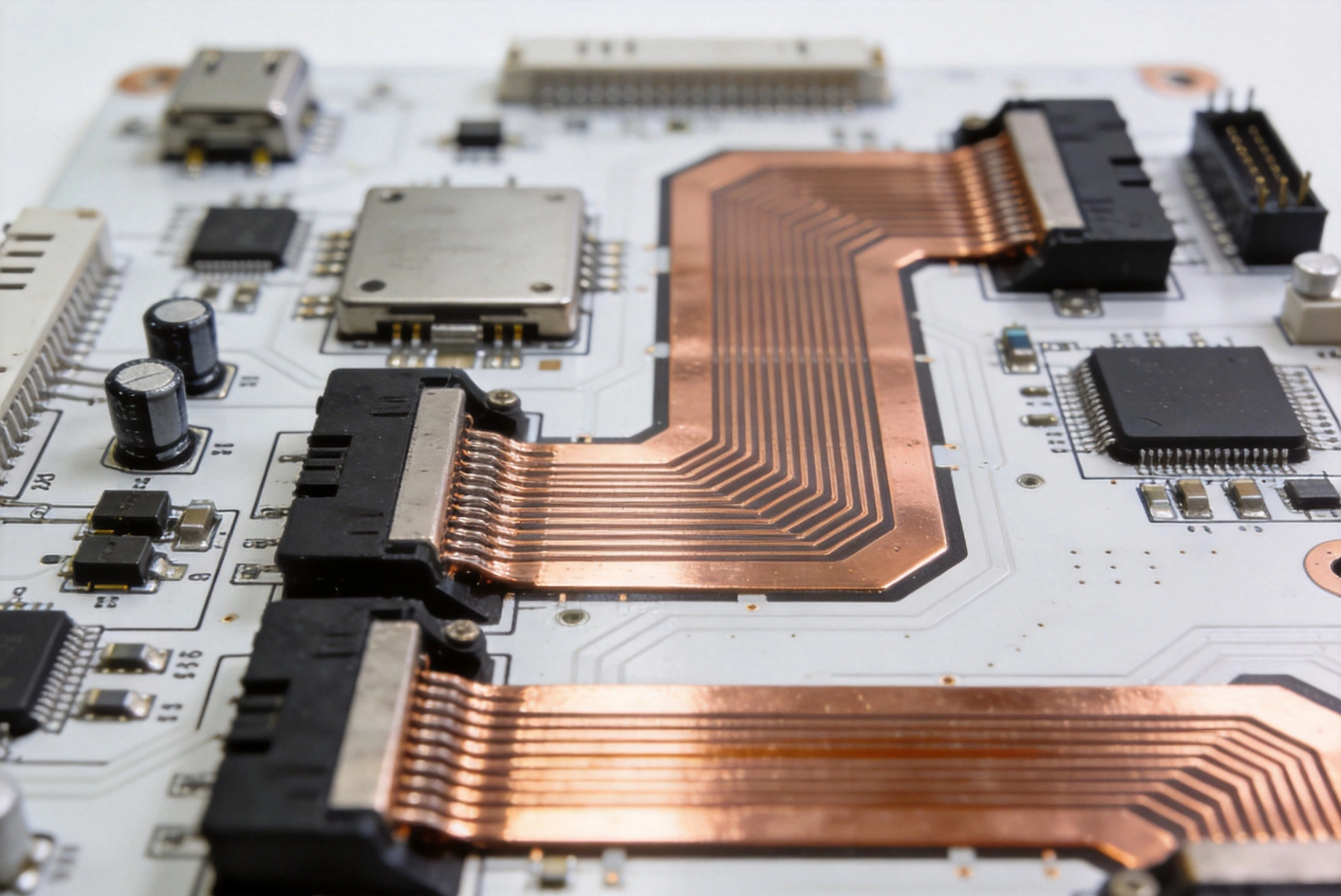
Aerospace power distribution systems place demands on PCB design that are fundamentally different from those of commercial electronics. A single board in an aircraft or spacecraft may need to carry hundreds of amps across bus bars, distribute power...
https://www.high-current-pcb.com/high-current-pcb-thermal-design/high-current-pcb-design-for-aerospace-power-distribution/
When your PCB design needs to handle tens or hundreds of amps, ordinary copper traces quickly reach their limits. Standard PCB fabrication processes were designed for signals, not power. The copper weight, trace width, and thermal management techni...
https://www.high-current-pcb.com/energy-power-electronics/high-current-pcb-placed-slots-vs-standard-traces-for-extreme-currents/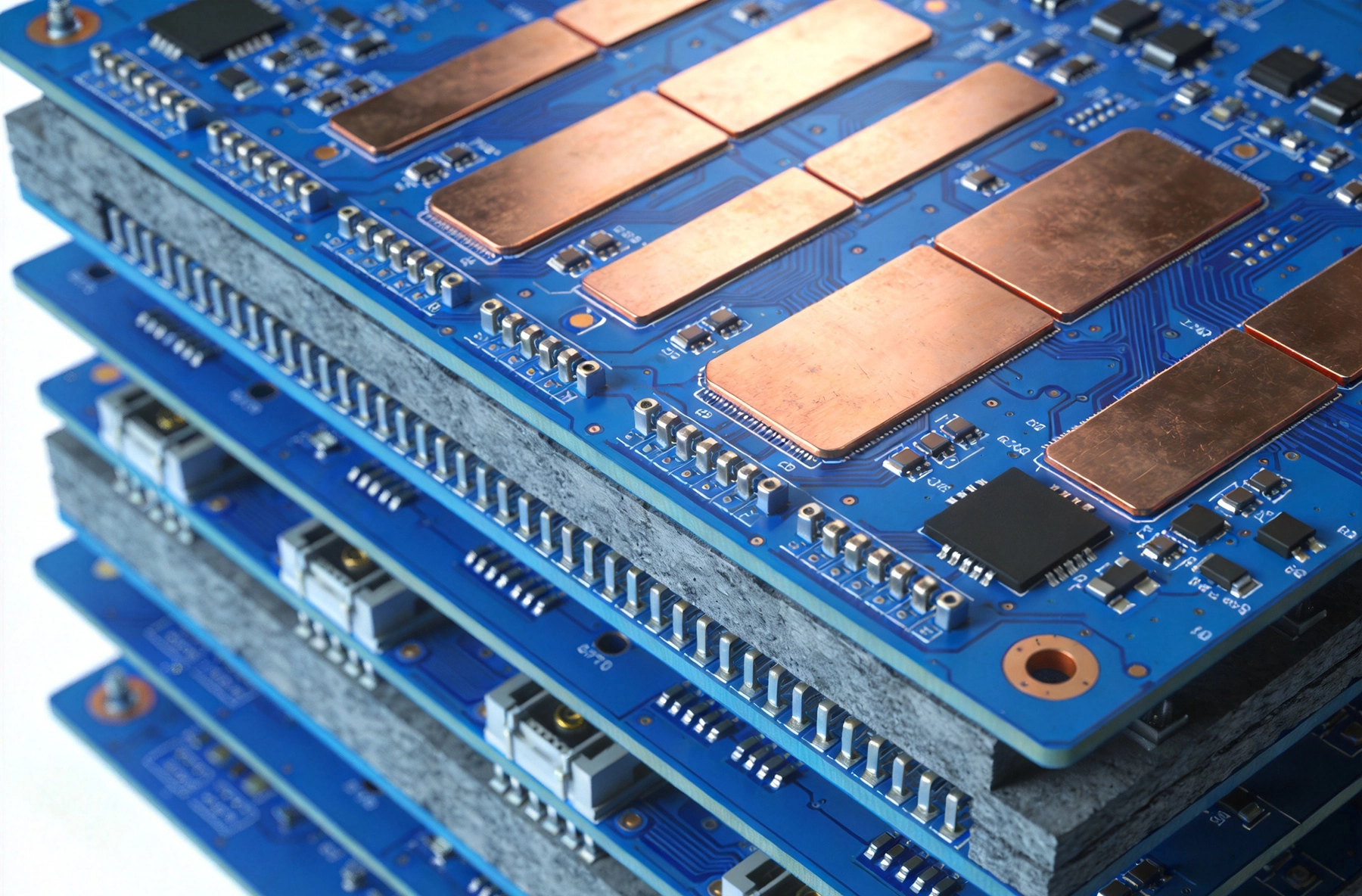
Telecommunications base stations are among the most demanding environments for printed circuit board design. A single macro cell site houses power amplifiers, radio transceivers, filters, and baseband processing units — all running simultaneously, ...
https://www.high-current-pcb.com/high-current-pcb-thermal-design/high-current-pcb-design-for-telecommunications-base-stations/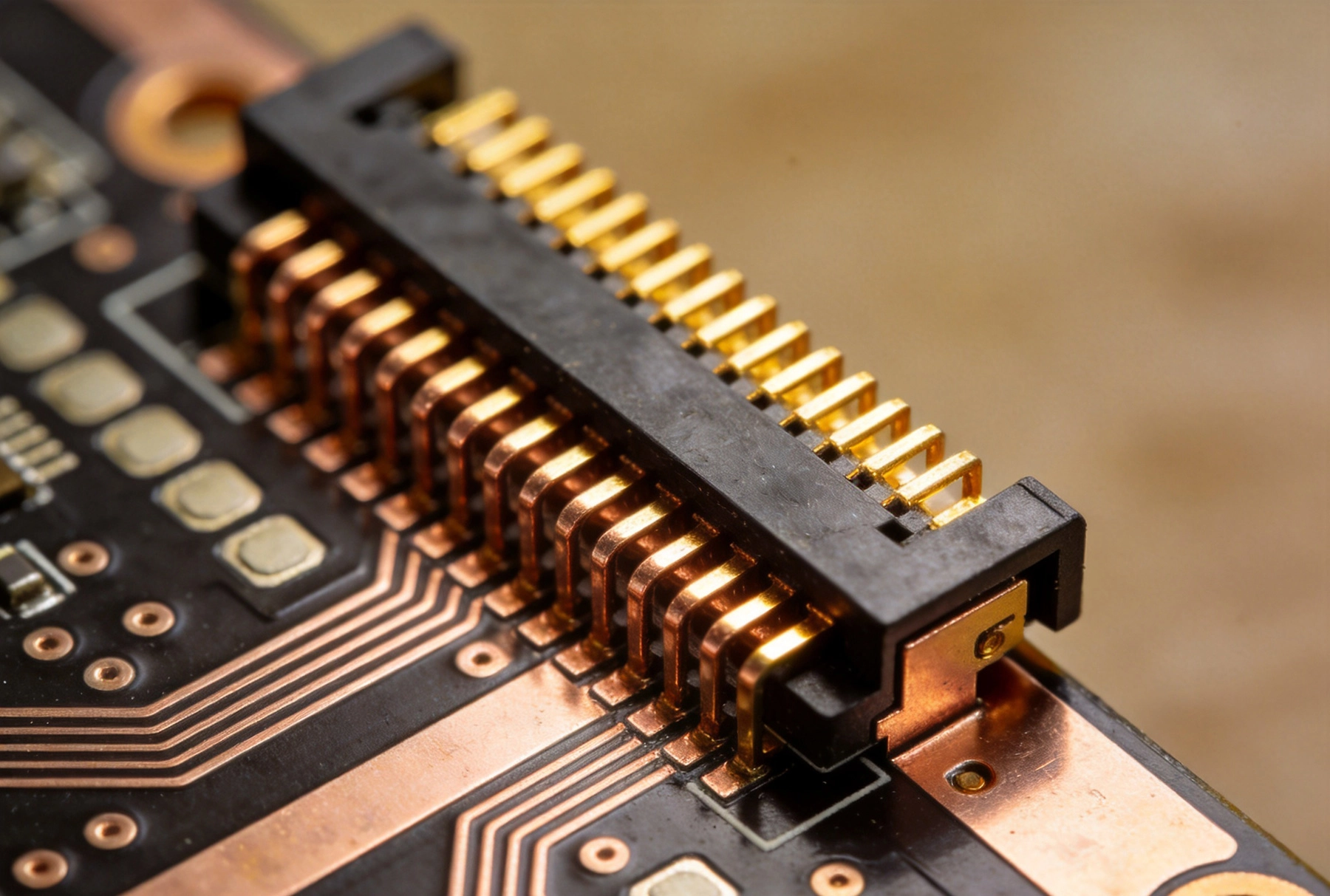
Power delivery is the unsung backbone of every electronic system. While signal integrity and high-speed routing get the spotlight, the connectors that carry tens or hundreds of amperes into and out of a PCB determine whether a design runs cool and ...
https://www.high-current-pcb.com/industrial-automation/high-current-pcb-edge-connectors-current-rating-and-thermal-limits/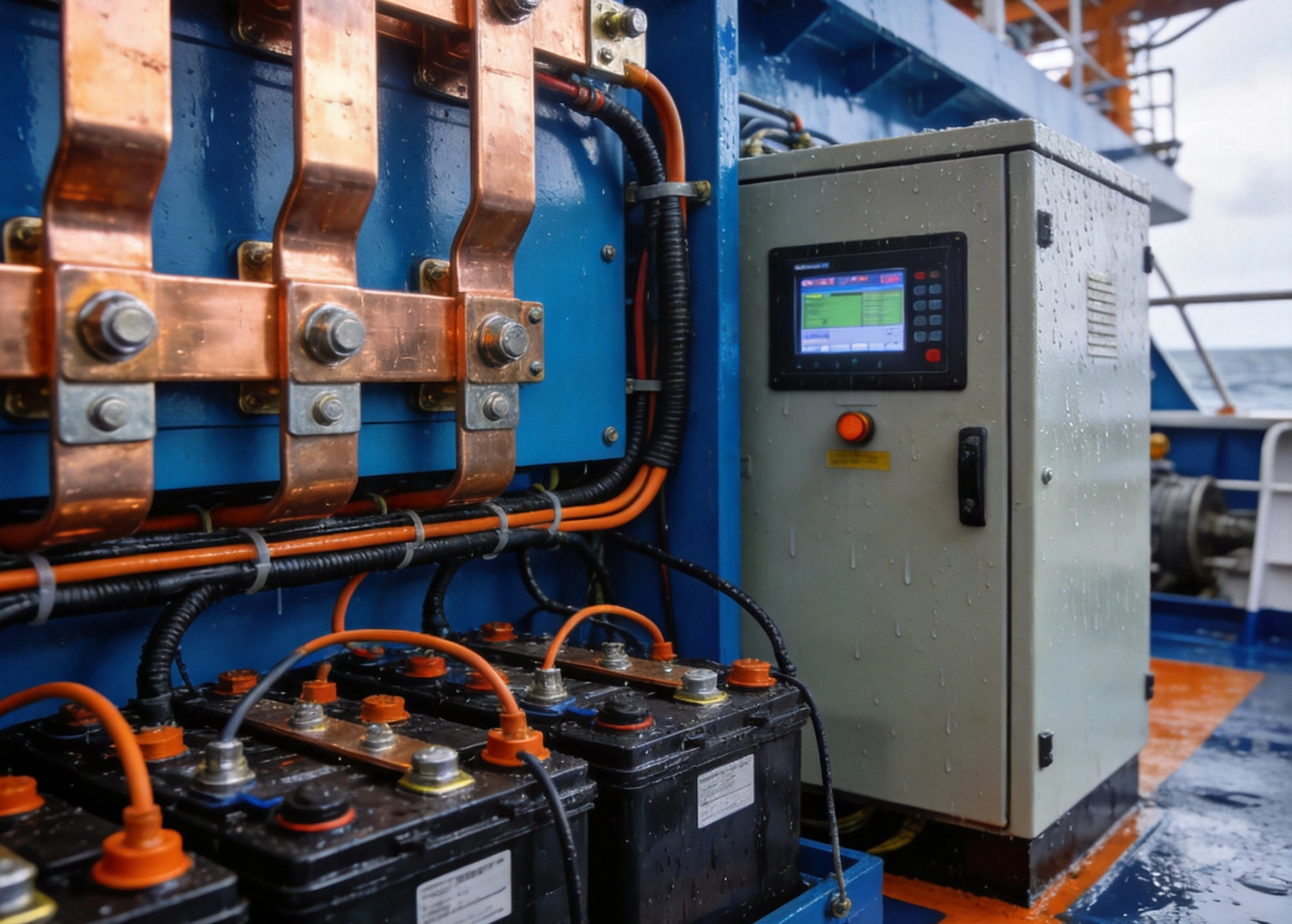
Marine battery systems operate in some of the most demanding environments in electronics. Whether powering electric ferries, offshore supply vessels, or recreational boats with advanced navigation systems, these battery banks must deliver high curr...
https://www.high-current-pcb.com/high-current-pcb-thermal-design/high-current-pcb-design-for-marine-battery-systems/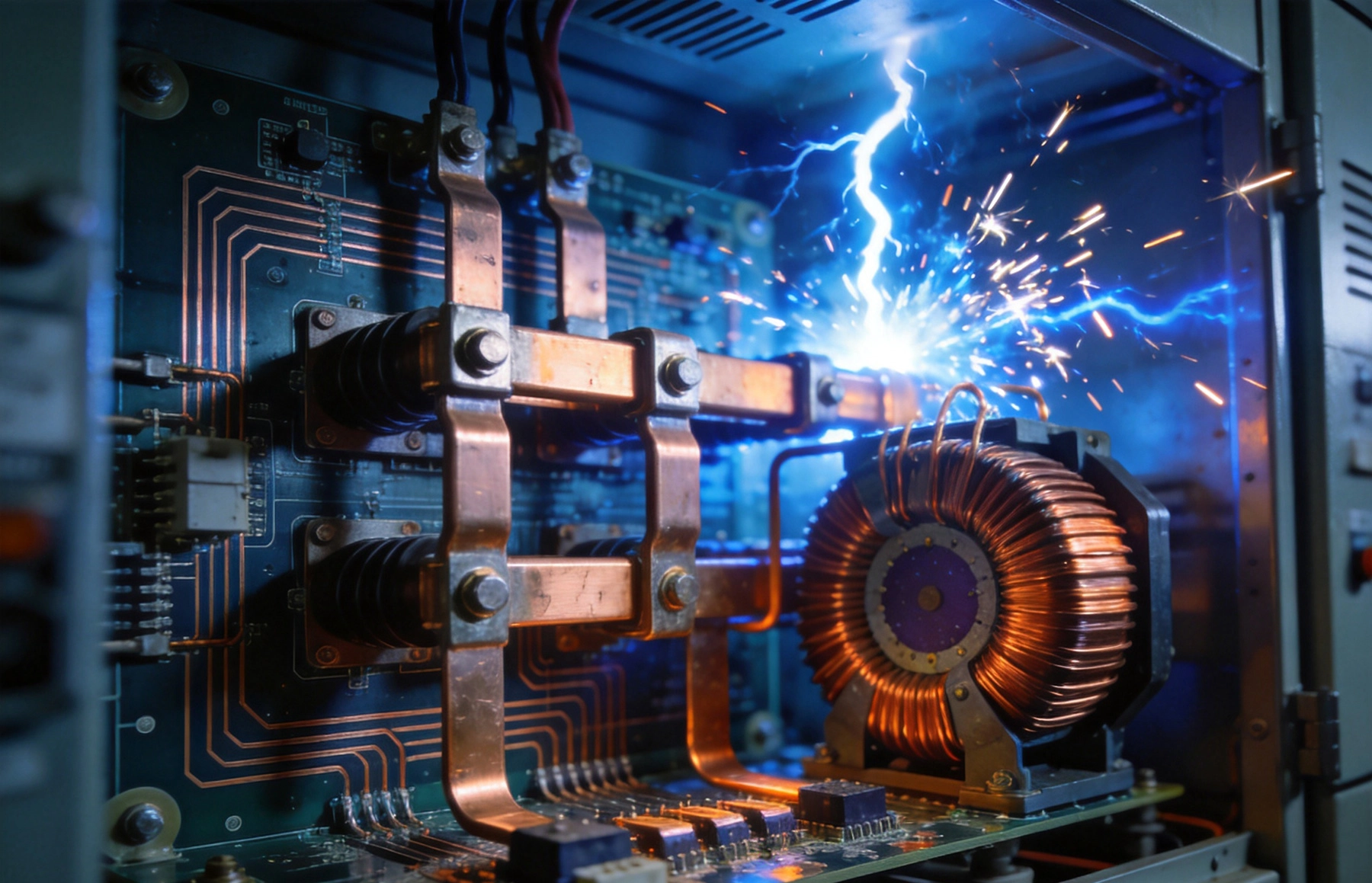
High-voltage direct current (HVDC) transmission is experiencing a renaissance. As renewable energy sources—particularly offshore wind and remote solar farms—push power generation farther from population centers, HVDC's superior long-distance effici...
https://www.high-current-pcb.com/high-current-pcb-thermal-design/high-current-pcb-design-for-high-voltage-dc-transmission/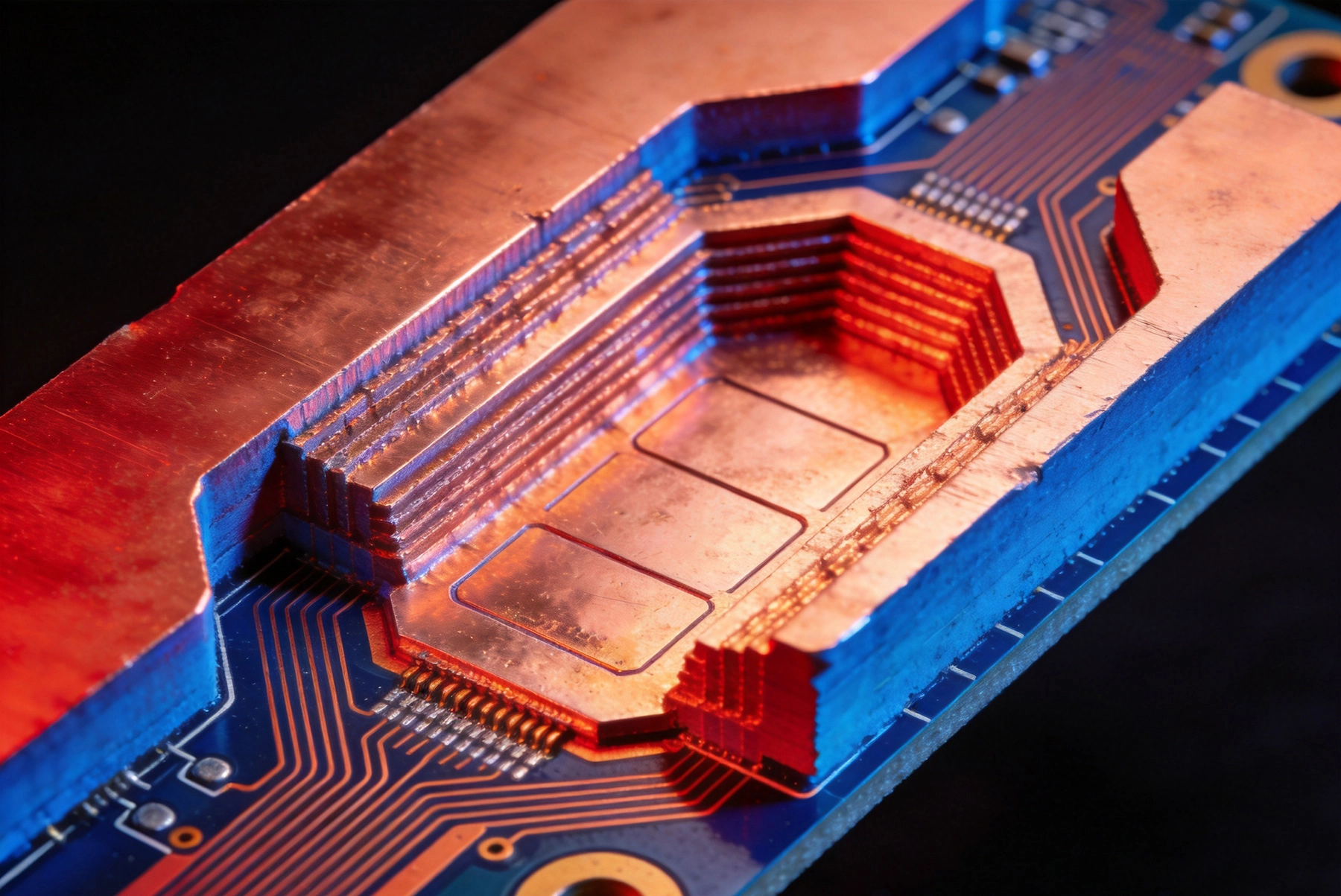
In power electronics, managing heat is as important as managing current. A trace that can carry 20 amps on paper may fail in practice if the heat generated by I²R losses cannot escape the board fast enough. This is where the choice between internal...
https://www.high-current-pcb.com/automotive-ev-systems/high-current-pcb-embedded-copper-internal-vs-external-heat-dissipation/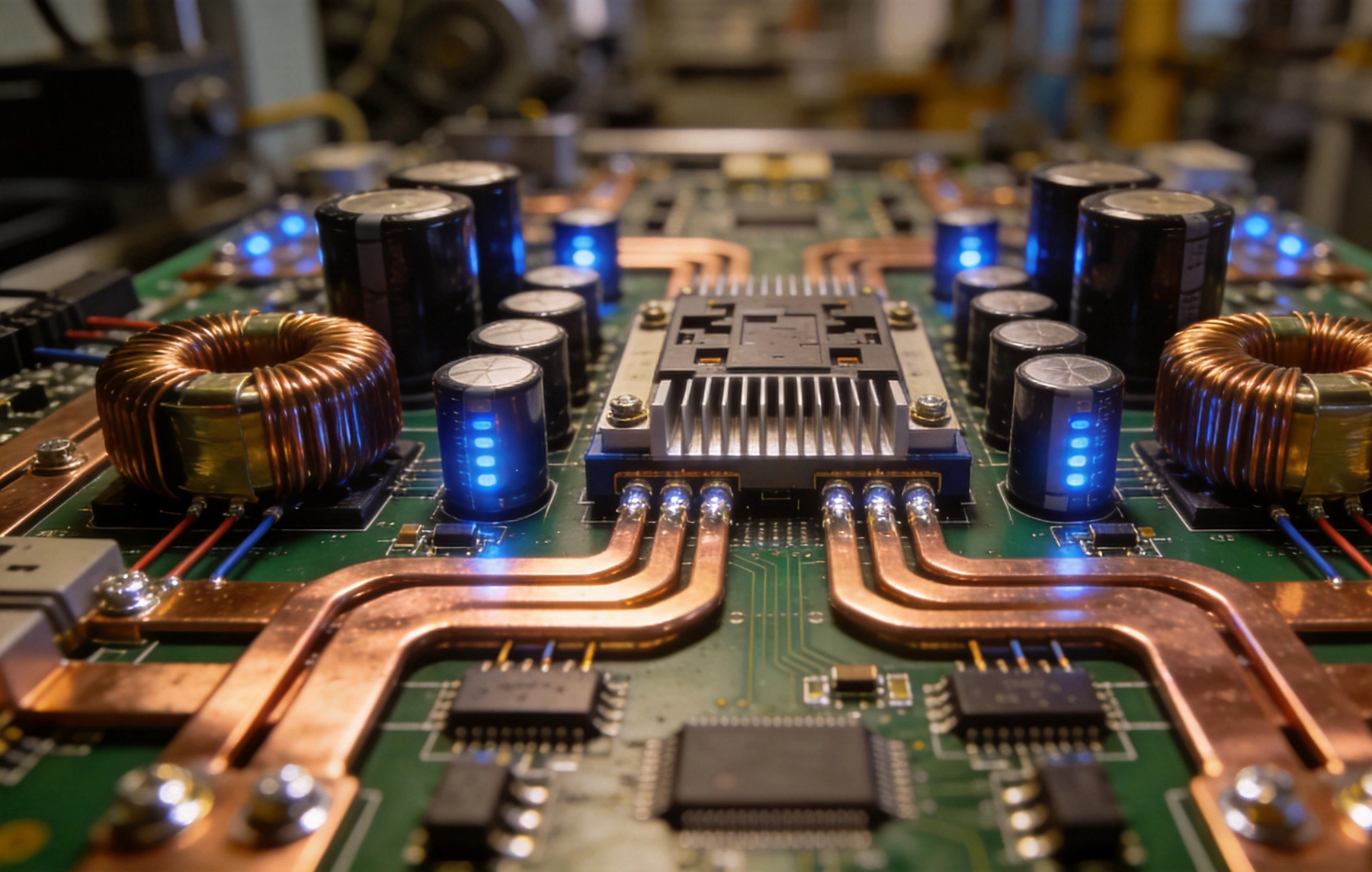
Industrial motor drives are among the most demanding applications in power electronics. A variable frequency drive (VFD) controlling a 30kW motor might switch hundreds of amps at bus voltages of 400V to 690V, generating heat inIGBT modules, DC link...
https://www.high-current-pcb.com/high-current-pcb-thermal-design/high-current-pcb-design-for-industrial-motor-drives/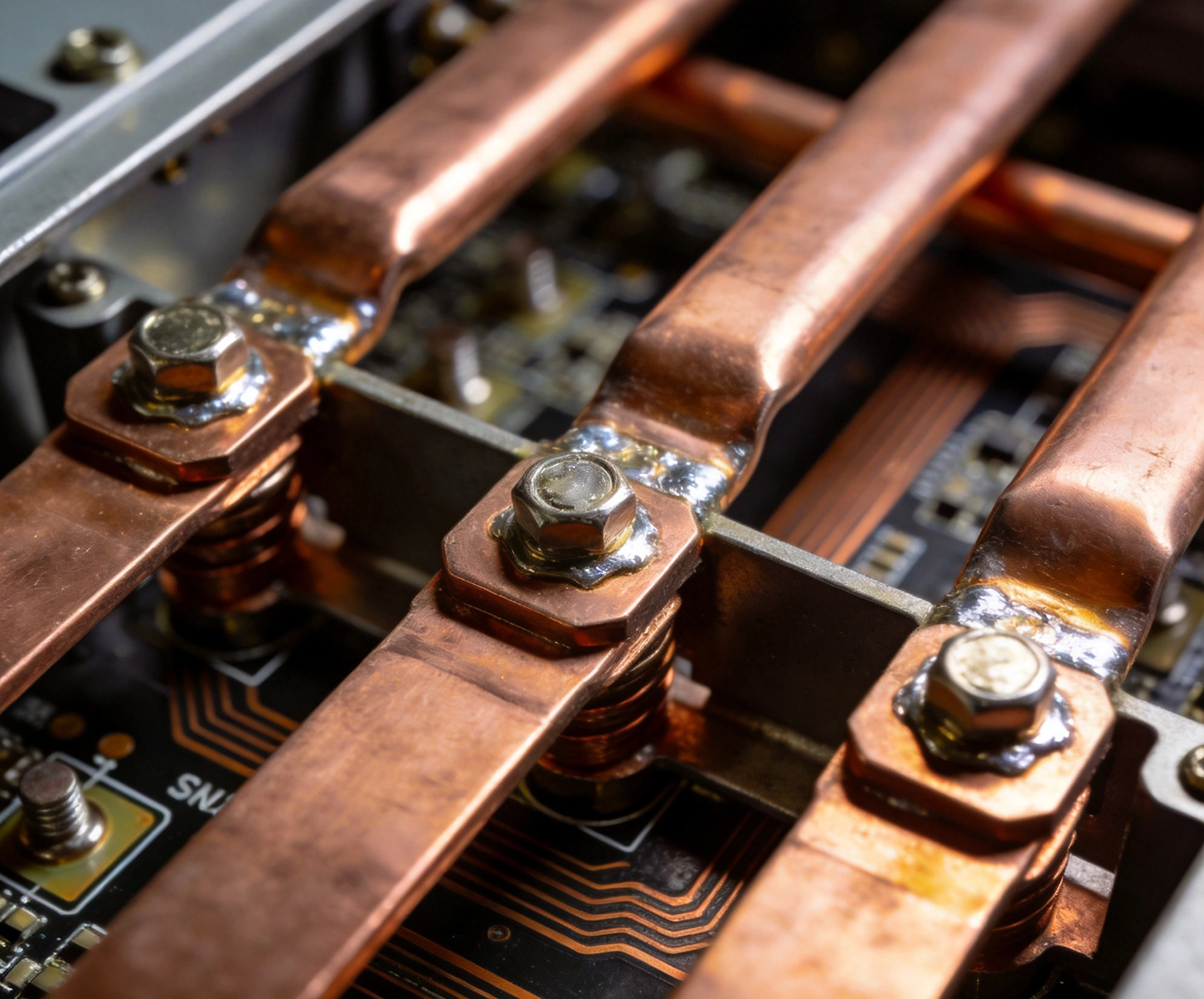
Renewable energy microgrids are among the most demanding environments for power electronics. They must handle bidirectional power flow, operate reliably across wide temperature ranges, and do so while maintaining high conversion efficiency in syste...
https://www.high-current-pcb.com/high-current-pcb-thermal-design/high-current-pcb-design-for-renewable-energy-microgrids/